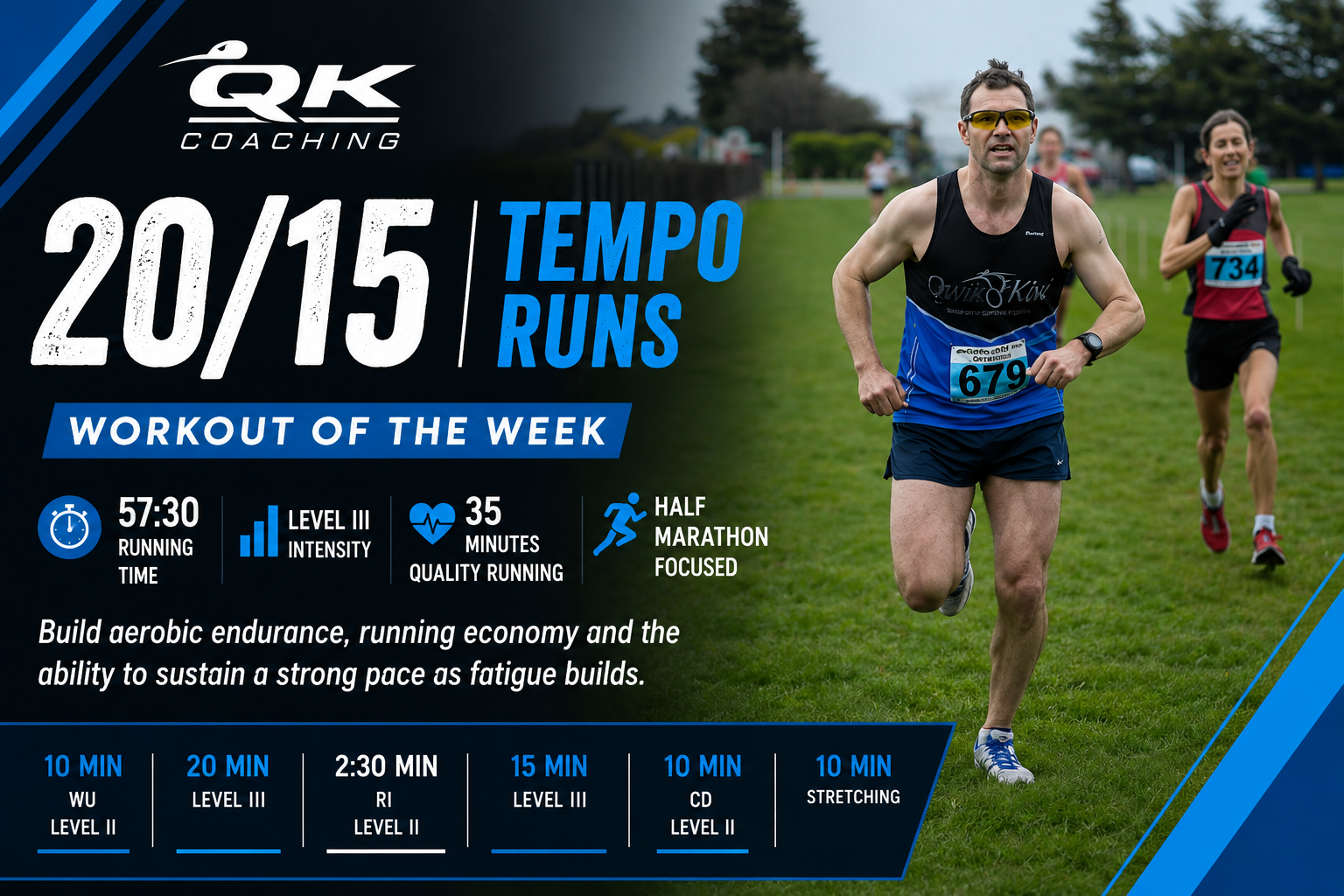
Coach Ray’s Workout of the Week: 20/15 Tempo Runs
Tempo running is an important bridge between easy aerobic running and the harder threshold work used earlier in a half marathon training build up. Done correctly, it teaches you to settle into a strong, sustainable rhythm and maintain efficient running for an extended period without turning every quality session into a hard interval workout.
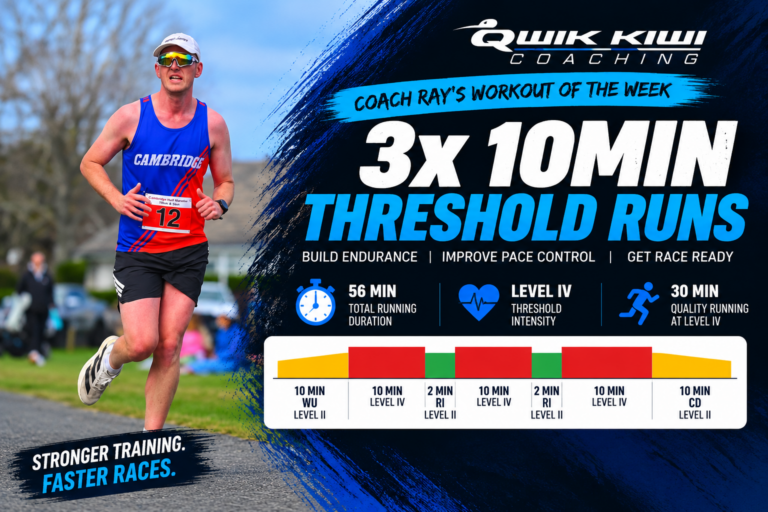
This week’s Coach Ray’s Workout of the Week is 20/15 Tempo Runs. The session combines two substantial periods of Level III running—20 minutes followed by 15 minutes—with just 2½ minutes of easy running between them.
That gives you 35 minutes of quality tempo running, making this an excellent workout for developing aerobic endurance, running economy and the ability to sustain a purposeful pace as fatigue gradually builds.
The Workout
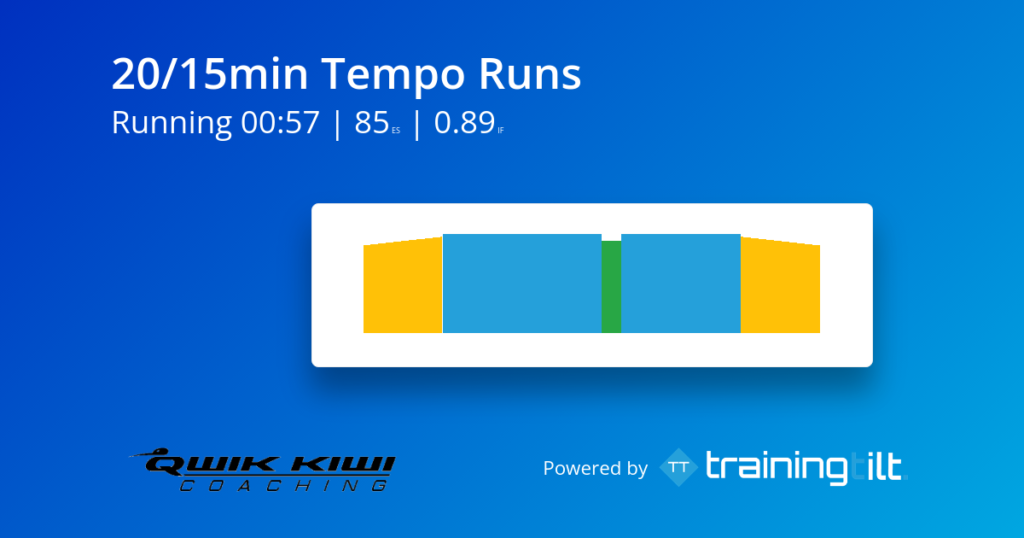
Warm-Up
- 10 minutes at Level II
Main Set
- 20 minutes at Level III
- 2 minutes 30 seconds at Level II recovery
- 15 minutes at Level III
Cool-Down
- 10 minutes at Level II
- 10 minutes stretching
Total Duration: 57 minutes 30 seconds running
Why This Workout Works
Half marathon success relies heavily on your ability to maintain an efficient aerobic effort for a long time.
The 20/15 Tempo Runs session develops exactly that ability.
Level III sits above your normal easy-running intensity but below threshold. You’re working purposefully, yet the effort remains controlled enough to accumulate a substantial amount of quality running without generating the fatigue associated with harder Level IV or Level V sessions.
The first 20-minute effort gives you time to establish a strong rhythm. After only 2½ minutes of easy Level II running, you begin another 15-minute tempo effort.
That second effort is particularly valuable.
You’re no longer completely fresh, so you’re learning to maintain good running mechanics and an appropriate intensity while carrying some fatigue—an important skill for half marathon runners.
This workout helps develop:
- Aerobic endurance
- Running economy
- Sustainable speed
- Pace control
- Resistance to fatigue
- Mental resilience
The objective isn’t to see how fast you can complete the two efforts. It’s to accumulate 35 minutes of controlled Level III running.
Session Snapshot
| Goal | Develop aerobic endurance and the ability to sustain a strong, controlled running intensity |
| Duration | 57 minutes 30 seconds |
| Quality Running | 35 minutes |
| Intensity | Level III |
| Training Phase | Final Quality (FQ) Phase |
| Best For | Half Marathon runners |
| Terrain | Flat to gently rolling |
| Equipment | Running shoes and GPS watch (optional) |
| Difficulty | Intermediate |
| Session Type | Tempo |
How Hard Should Level III Feel?
Level III should feel steady, purposeful and controlled.
You’re no longer jogging easily at conversational Level II intensity, but you’re also well below the comfortably hard intensity associated with Level IV threshold running.
Your breathing should be noticeably stronger, but you should feel as though you could maintain the intensity for considerably longer than either of the individual efforts in this workout.
That’s important.
The temptation with a session labelled “tempo” is to push the pace until it becomes threshold running. If that happens, you’ve changed the purpose of the workout.
Level III should allow you to find a rhythm and settle into it.
Why 20 Minutes Followed by 15 Minutes?
There’s a deliberate difference between completing 35 continuous minutes at Level III and breaking the workload into 20 and 15-minute efforts.
The first 20-minute block provides a substantial period of continuous aerobic work. You have enough time to settle into your pace, establish good technique and accumulate meaningful time at Level III.
The short recovery then provides just enough opportunity to relax and reset.
When you begin the second 15-minute effort, you should feel refreshed—but not completely recovered.
That means you’re practising maintaining efficient tempo running while already carrying some fatigue from the first effort.
For a half marathon runner, that’s extremely useful.
What Should the 2½-Minute Recovery Feel Like?
Easy.
The recovery is Level II, so resist the temptation to maintain your tempo pace.
Back off, relax your shoulders, allow your breathing to settle and prepare yourself for the second effort.
You don’t need to stop.
The objective is active recovery rather than complete recovery.
By keeping the recovery relatively short, you maintain much of the aerobic demand of the session while giving yourself enough of a reset to execute the final 15 minutes properly.
Don’t Turn Tempo Into Threshold
This is probably the most important coaching point for this workout.
Level III means Level III.
Running the session at Level IV doesn’t make it a better workout—it makes it a different workout.
Threshold training certainly has an important place in half marathon preparation, but that isn’t the objective here.
By keeping the intensity at Level III, you can accumulate considerably more quality running while keeping the overall training stress manageable.
That allows you to develop aerobic endurance without compromising the training that follows.
Choosing the Right Route
A flat or gently rolling route works particularly well for this session.
Look for somewhere that allows you to run continuously without regularly stopping for traffic lights, road crossings or other interruptions.
Good options include:
- A quiet road
- A cycle path
- A waterfront or riverside path
- A measured running loop
- A gently rolling trail with reliable footing
- A treadmill
The terrain doesn’t need to be perfectly flat.
In fact, gentle undulations can help teach you to maintain effort rather than pace. Allow your pace to slow slightly uphill and increase naturally downhill while keeping the overall Level III intensity consistent.
Coaching Tips
Start the First 20 Minutes Conservatively
Don’t spend the opening few minutes trying to establish your fastest possible tempo pace.
Ease into Level III and allow your breathing and running rhythm to settle.
Focus on Effort, Not Pace
Weather, terrain, fatigue and your current fitness will all influence your pace.
The target is Level III intensity.
Relax During the Recovery
Use those 2½ minutes properly. Run easily, settle your breathing and prepare mentally for the second block.
Maintain Good Technique
As fatigue develops during the final 15 minutes, pay attention to posture, cadence and relaxed upper-body movement.
Finish Controlled
You don’t need a finishing sprint.
If you’ve paced the workout correctly, the final few minutes should require concentration but shouldn’t become a battle to maintain the prescribed intensity.
Common Mistakes
Starting Too Fast
Twenty minutes is a substantial opening effort. Starting aggressively can turn the second half of the workout into survival rather than controlled training.
Running at Threshold
If you’re breathing heavily and counting down every minute until the interval finishes, there’s a good chance you’ve moved beyond Level III.
Chasing an Exact Pace
Your tempo pace isn’t a fixed number regardless of conditions. Run according to the prescribed intensity.
Running the Recovery Too Hard
The 2½-minute Level II section exists for a reason. Use it.
Racing the Final 15 Minutes
The second effort isn’t a test to see whether you can beat the pace of the first. Aim for consistent intensity and good running mechanics.
Variations
Developing Runner
- 15 minutes Level III
- 2:30 minutes Level II
- 10 minutes Level III
This provides 25 minutes of tempo running.
Standard Workout
- 20 minutes Level III
- 2:30 minutes Level II
- 15 minutes Level III
This provides 35 minutes of tempo running.
Experienced Runner
- 25 minutes Level III
- 2:30 minutes Level II
- 20 minutes Level III
This increases the quality workload to 45 minutes while retaining the same basic structure.
As always, progression doesn’t have to mean running faster. Increasing the duration you can comfortably sustain at the correct intensity is an important form of progression in its own right.
When Should You Include This Workout?
I would typically use a workout like 20/15 Tempo Runs during the Final Quality (FQ) Phase of half marathon preparation.
As we move through the different phases, as we get closer to your half marathon we are making the training intensity more specific to race intensity.
Tempo running fits particularly well in the Final Quality (FQ) phase.
Tempo intensity is dialling in your race pace, utilising the fitness developed in the earlier phases of training.
The aerobic endurance developed through workouts such as this provides an important foundation.
Coach Ray’s Verdict
I like this workout because it rewards patience.
The challenge isn’t running the first 20 minutes quickly. It’s finding the correct Level III intensity, maintaining it efficiently and then returning to that same controlled rhythm after a relatively short recovery.
That second 15-minute effort tells you a lot about how well you’ve paced the first.
If you’ve judged the session correctly, you’ll be working purposefully but still running with good form and control.
If you’re fighting simply to finish, you probably ran too hard.
Remember: the purpose of tempo training isn’t to prove how fast you are today. It’s to develop the aerobic strength that allows you to become faster tomorrow.
Ready to Put Workouts Like This Into a Complete Half Marathon Plan?
Individual workouts are useful, but the greatest improvements come from knowing which workout to complete, when to complete it and what should follow it.
Inside the NZ Half Marathon Hub, your training follows a structured, periodised approach through the Foundation & Injury Prevention, Early Quality, Transition Quality and Final Quality phases.
That means sessions such as 20/15 Tempo Runs are placed where they provide the greatest benefit while working alongside your long runs, easy running, recovery and other quality sessions.
You’ll also have access to multiple half marathon training plans, fortnightly coaching calls and ongoing coaching support as you prepare for your next 21.1 km.